Emotional Intelligence 
​Workshops, Training & Coaching

The EQ-i 2.0 is the world's first scientifically validated emotional intelligence assessment and has been used globally in leadership development, coaching, and organizational research.
 
EQ is more than a soft skill - and it matters for leaders at every level. 

A lack of Emotional Intelligence awareness can have countless negative impacts on your organization.


Leveraging the EQ-I predictive model, a scientifically validated tool, in hiring, promoting, training, and
succession planning can improve your organization's performance through:

Increase Sales

Create Smooth Transitions Into Leadership Roles
Reduce Training Costs

Increase Productivity

Create Better Performing Leaders

Decrease Attrition Rates

Business owners, association leaders, people managers, Organizational Development / Human Resources / Learning & Development teams work with Actionable Insights, LLC because we deeply understand the intricacies of team dynamics and recognize the paramount importance of emotional intelligence in fostering cohesive and high-performing teams. With our extensive experience you can trust that you are partnering with a trusted ally committed to unlocking the full potential of your team through the transformative power of emotional intelligence.
Our Approach

Consult

We will delve into your specific pain points, needs, and goals to chart a path forward.

Customize

We will craft a tailored training or coaching plan designed exclusively for your team's success.

Transform

We will put your customized plan into action so you can witness the transformation as your team flourishes

Our Tool

The EQ-i 2.0 

For almost 20 years, consultants and organizations have trusted the science that underpins the EQ-i 2.0 (and its predecessor the EQ-i) to help improve human performance.  Being the first scientifically validated measure of emotional intelligence (EI), coupled with research from premier organizations, means you can count on the EQ-i 2.0 to add robustness and accuracy to your talent management initiatives.  

Emotional Intelligence in Leadership Effectiveness

  • Strengthen leadership effectiveness at every level
  • Improve team engagement and communication
  • Build trust across teams and departments
  • Navigate change with clarity and confidence
  • Develop leaders who influence, not just manage

Emotional Intelligence and Hiring Better Employees

  • Reduce costly turnover and hiring mistakes
  • Improve long-term employee performance
  • Strengthen team dynamics and collaboration
  • Hire those who can handle pressure and change
  • Build a more stable, high-performing workforce

Emotional Intelligence in Employee Retention
​ 

  • Improve retention and reduce turnover costs
  • Increase engagement and job satisfaction
  • Strengthen team collaboration and communication
  • Create a more supportive and resilient workplace
  • Keep high-performing employees longer


"Nicole presented to our staff on Emotional Intelligence, and the session was an informative and worthwhile session for all. She presented the topic in an engaging and relatable way, helping our team better understand how emotional awareness and empathy can positively influence communication, collaboration, and workplace relationships. Nicole shared practical strategies that our staff can apply in their day-to-day interactions, making the session both insightful and actionable. We truly appreciated the opportunity to learn from her expertise."


​- Board Relations & HR Director
​National Association of Skilled Trade Professionals  

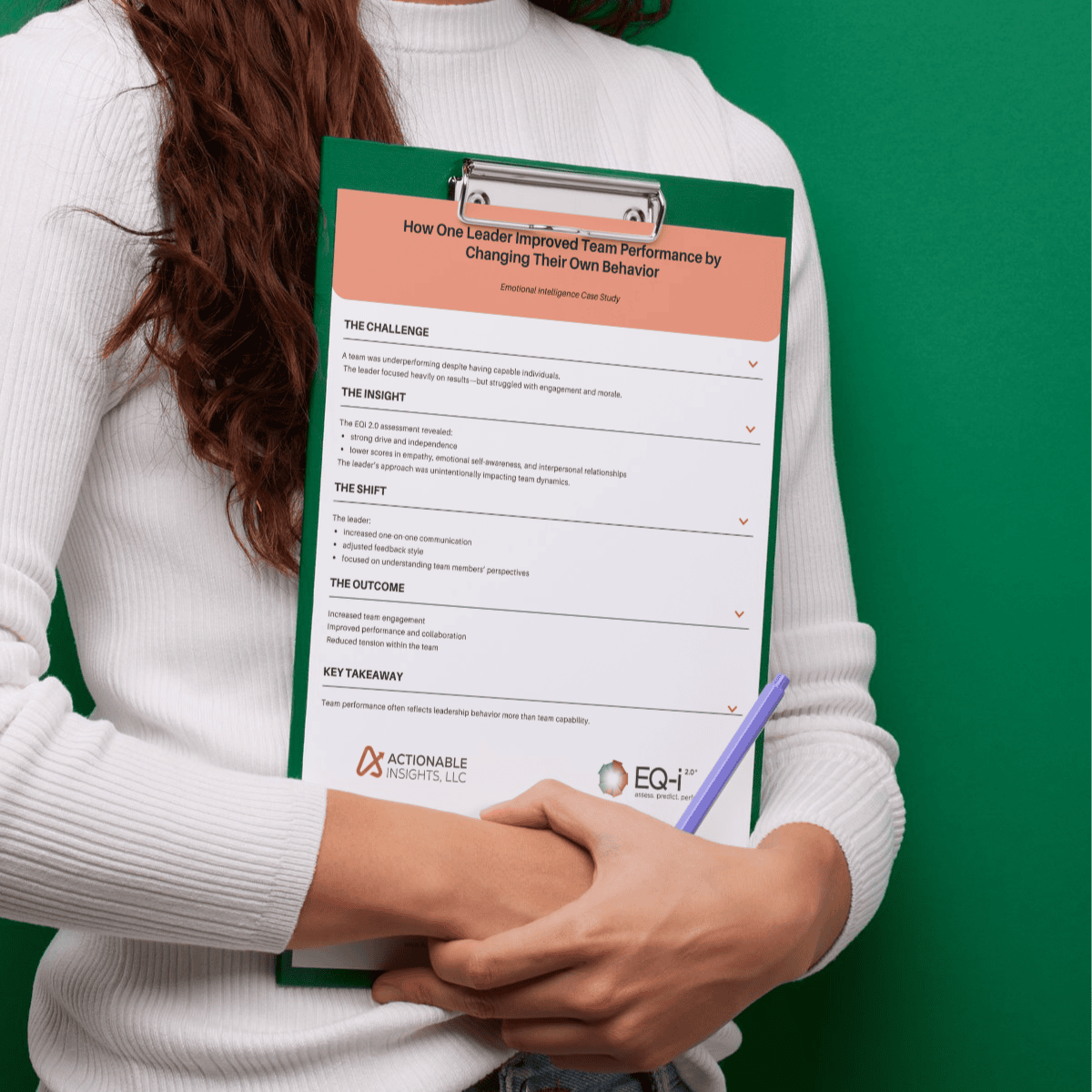
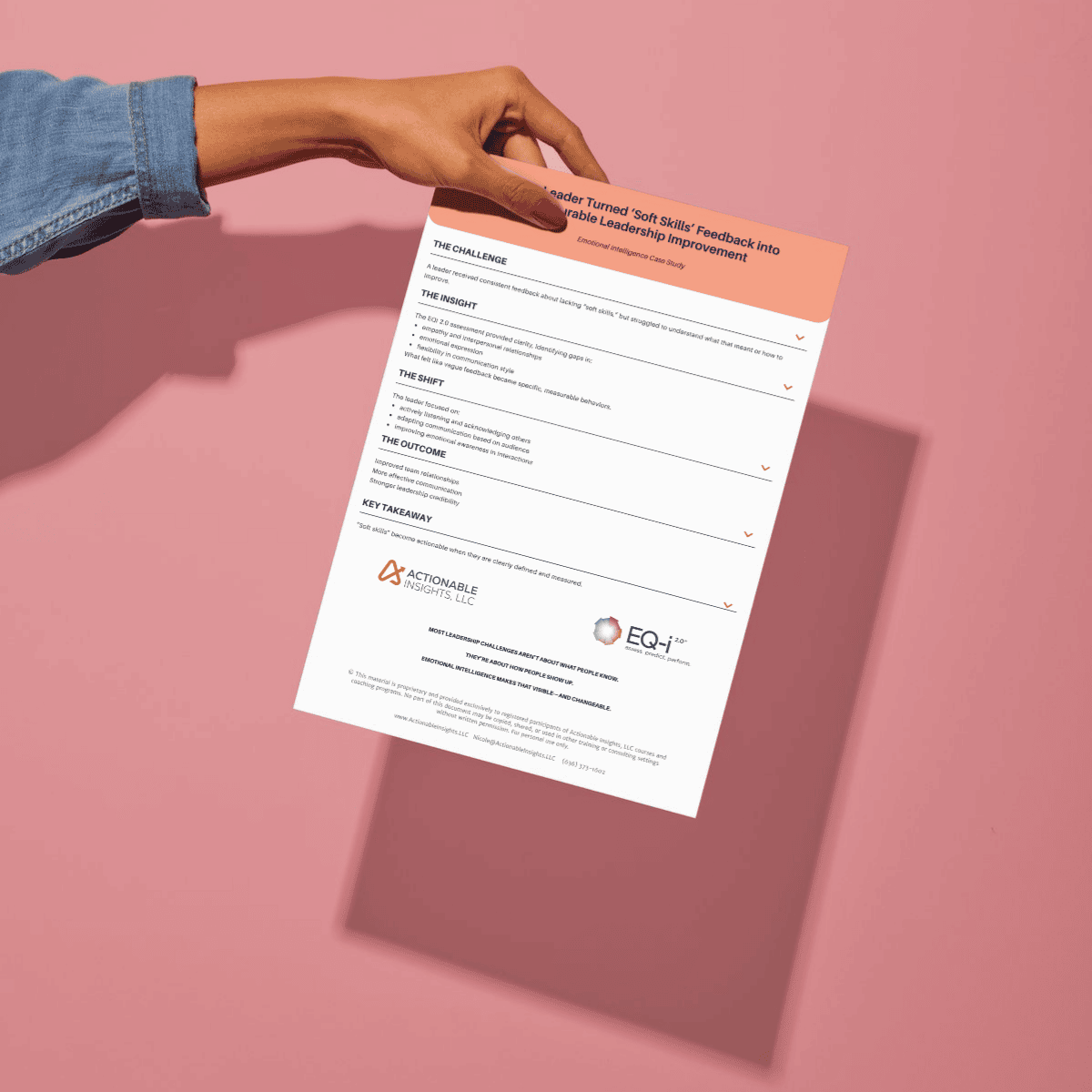
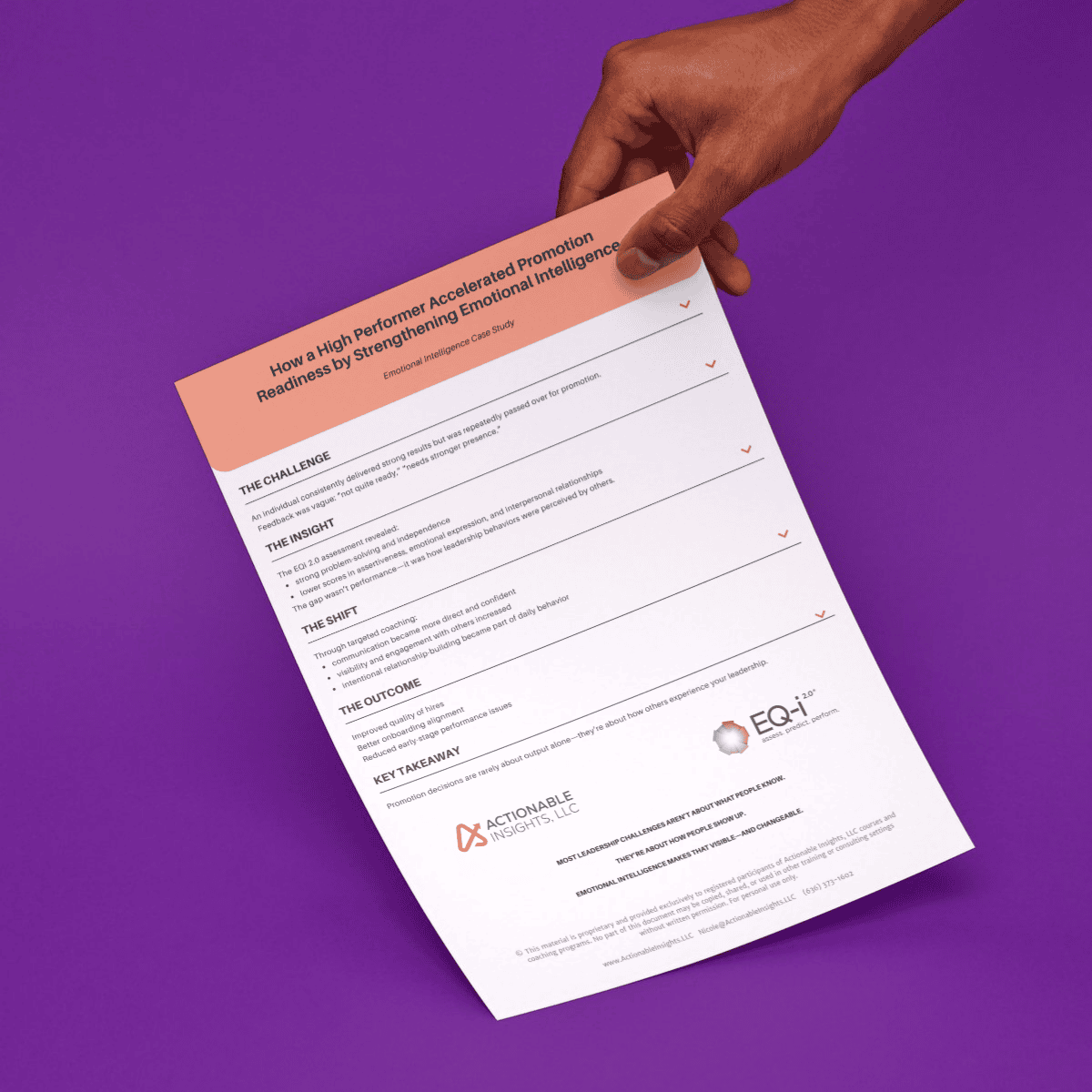
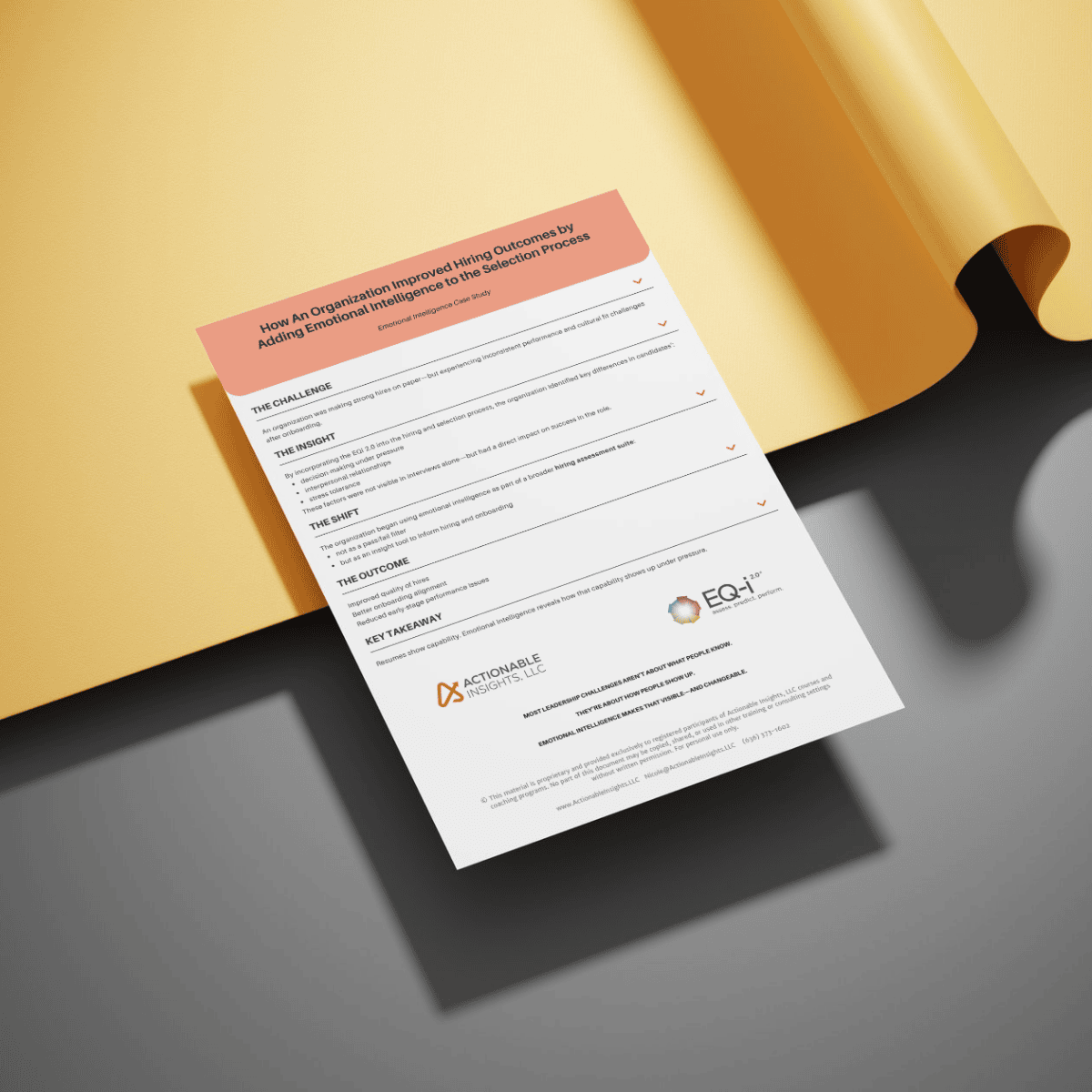
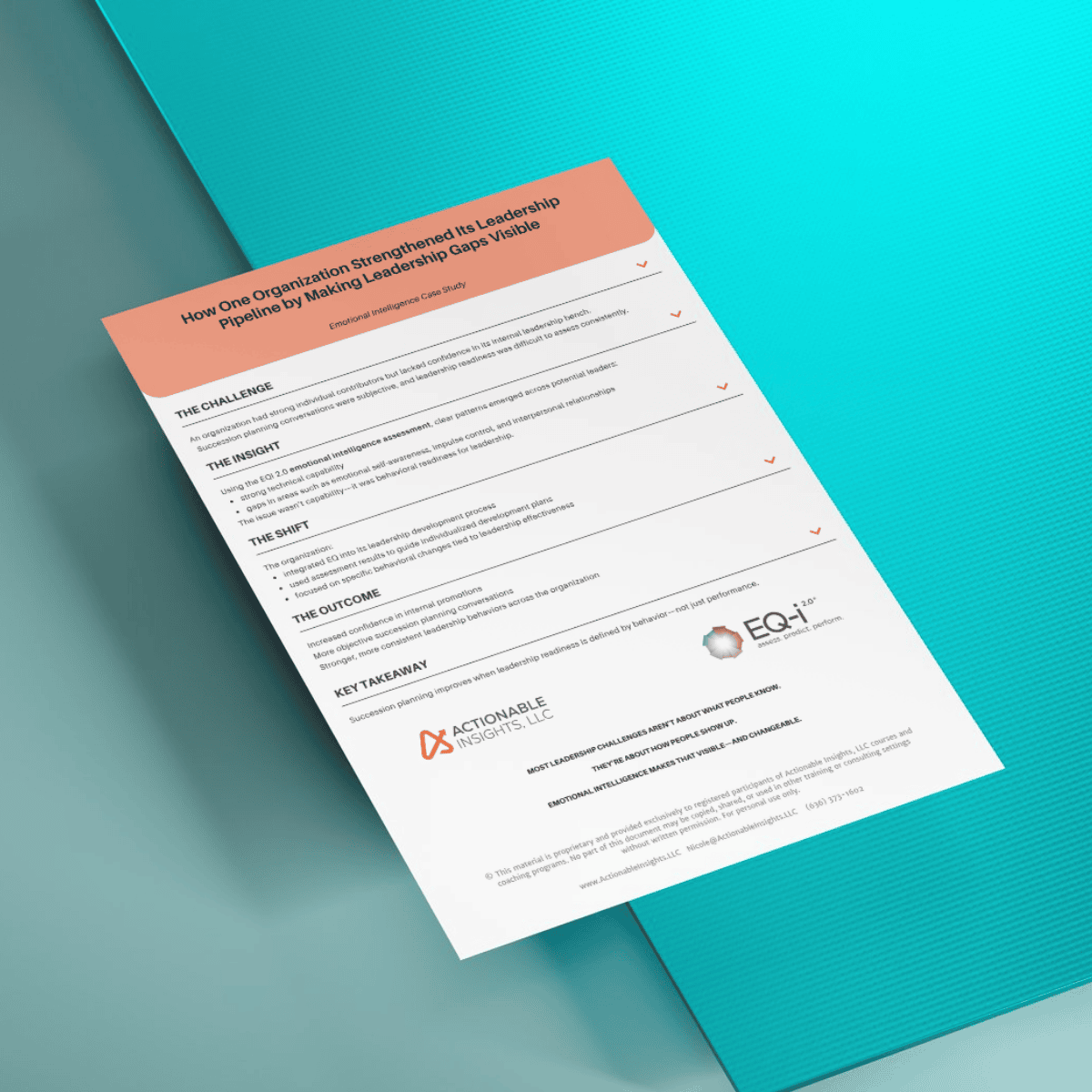
Case Studies

Frequently Asked Questions

An emotional intelligence assessment measures how effectively an individual understands and manages their own emotions, as well as how they navigate relationships with others.

Tools like the EQi 2.0 assessment evaluate key areas such as self-awareness, decision-making, stress management, and interpersonal effectiveness—providing a clear picture of leadership capability beyond technical skill.

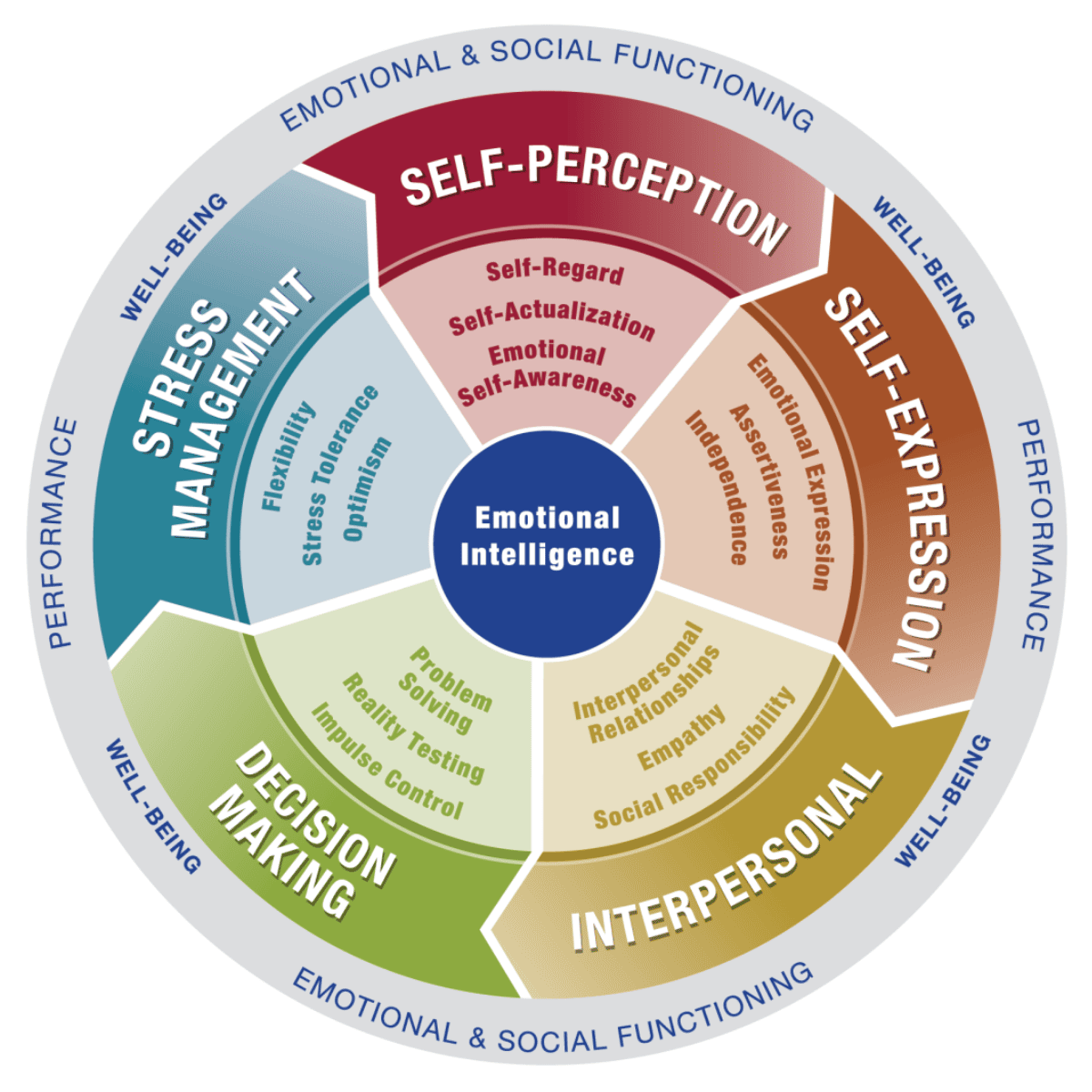
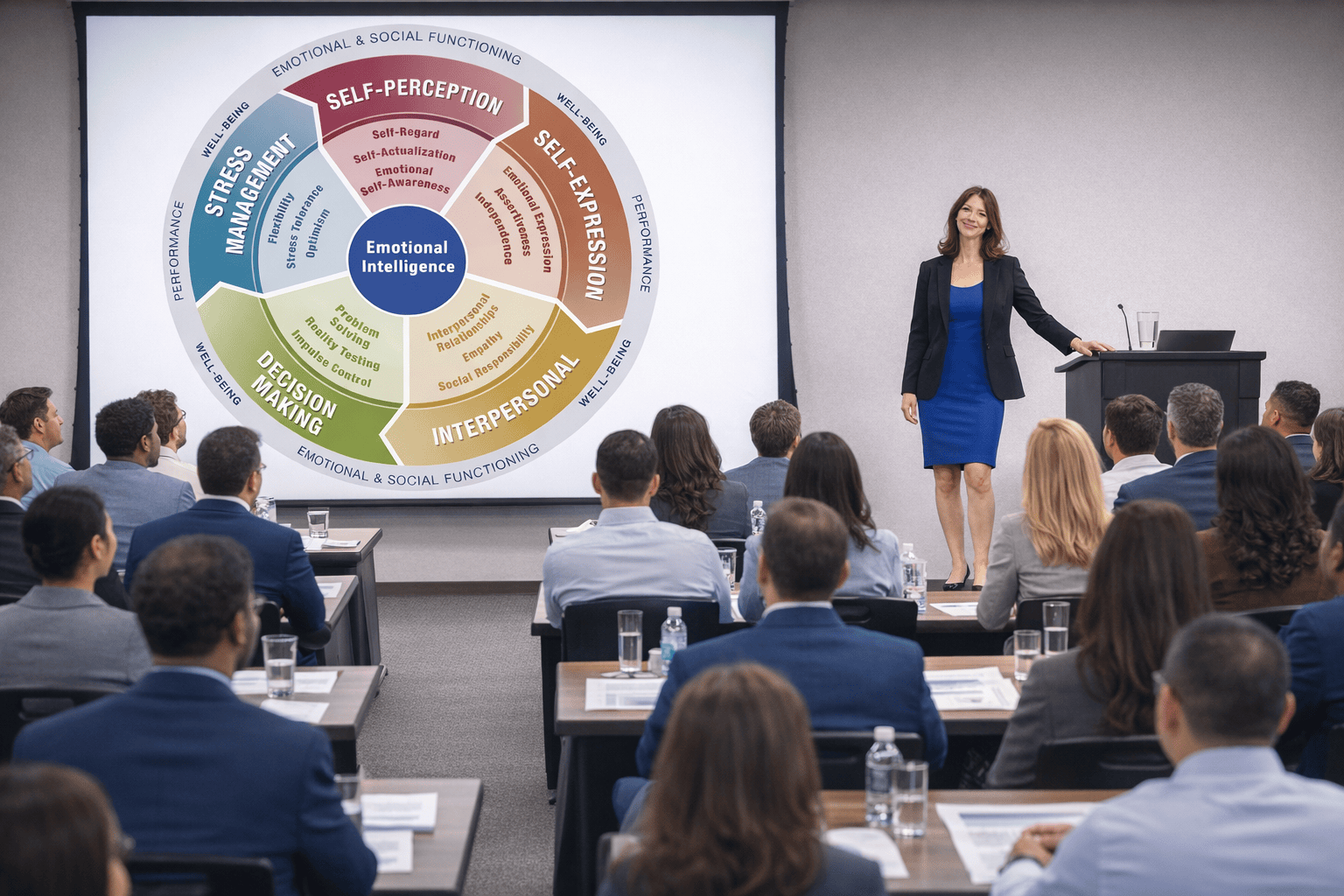
The EQi 2.0 assessment is a scientifically validated emotional intelligence assessment that measures 16 elements across areas like self-perception, self-expression, interpersonal relationships, decision-making, and stress management.

It is widely used in leadership development, coaching, and organizational training to improve performance and effectiveness.

Emotional intelligence in the workplace directly impacts communication, decision-making, teamwork, and leadership effectiveness.

Leaders and employees with higher emotional intelligence tend to:

· manage conflict more effectively

· build stronger relationships

· make better decisions under pressure

· create more positive work environments

Emotional intelligence is a key driver of leadership effectiveness because it influences how leaders:

· communicate

· respond to challenges

· manage stress

· build trust with their teams

Leaders with strong emotional intelligence are more adaptable, self-aware, and capable of leading others through complexity and change.

Emotional intelligence training for leaders improves engagement by helping leaders create environments where employees feel understood, supported, and valued.

When leaders communicate effectively and manage relationships well, employees are more likely to stay engaged and perform at a higher level.

The components of emotional intelligence measured by tools like EQi 2.0 include:

· self-awareness (understanding your emotions)

· self-expression (communicating effectively)

· interpersonal skills (building relationships)

· decision-making (using emotion effectively)

· stress management (handling pressure)

Each of these areas contributes to overall leadership and workplace effectiveness.

Personality describes how someone tends to behave, while emotional intelligence reflects how effectively someone manages themselves and their relationships.

Unlike personality, emotional intelligence can be developed over time, making it highly valuable in leadership development and coaching.

Yes. Emotional intelligence can be improved through targeted emotional intelligence coaching and training.

With the right assessment and development plan, individuals can strengthen areas such as self-awareness, communication, and stress management—leading to measurable improvements in performance.

Emotional intelligence is a core component of leadership development programs because it addresses the behavioral side of leadership.

Organizations use EQ assessments to:

· identify leadership strengths and gaps

· guide coaching and development plans

· improve real-world leadership effectiveness

The EQi 2.0 emotional intelligence assessment typically takes 15–20 minutes to complete.

The greatest value comes from the debrief and application, where individuals translate insights into specific leadership behaviors.

Emotional intelligence improves team performance by strengthening communication, trust, and collaboration.

Teams with higher emotional intelligence tend to:

· resolve conflict more effectively

· support one another

· maintain higher levels of engagement

Examples of emotional intelligence at work include:

· a leader staying composed under pressure

· giving feedback in a constructive way

· recognizing how emotions impact decisions

· adapting communication based on the audience

These behaviors directly influence team dynamics and outcomes.

To improve emotional intelligence at work, individuals need:

· awareness of their current strengths and gaps (via assessment)

· targeted development strategies

· ongoing practice and feedback

Structured tools like the EQi 2.0 provide a roadmap for improvement.

Organizations typically use an emotional intelligence assessment when they are:

· developing leaders

· improving team effectiveness

· addressing communication or performance challenges

· preparing high-potential employees for advancement

It is especially valuable when technical skills alone are not driving results.